Menopause is a normal stage of life, so it makes sense to support this transition with an Ayurvedic and holistic approach.
Moving through menopause is a rite of passage, just like the first menstruation, marriage and childbirth.
‘All things change,’ says our Thrive Journey Ayurvedic practitioner, Mani Maran. ‘It need not be good or bad. It is just that. A shift from one phase of existence to another.’
Ayurveda is an ancient Indian practice which literally means the science of life, it includes holistic tools and self-care rituals which offer natural remedies for peri menopause and menopause. Ayurveda for menopause helps us to move towards balance at a time of hormonal change.
Ayurveda includes personalised guidance around nutrition, daily health routines, herbs and lifestyle practices which can ease menopausal symptoms such as anxiety, insomnia and fatigue.
Mani says on the surface we may all look as if we having a similar experience of menopause, but the truth is we are all experiencing our own unique set of symptoms. The foundation of Ayurveda is to discover your dosha and from there you gain a greater understanding and knowledge about how you can support yourself through all life transitions, including menopause.
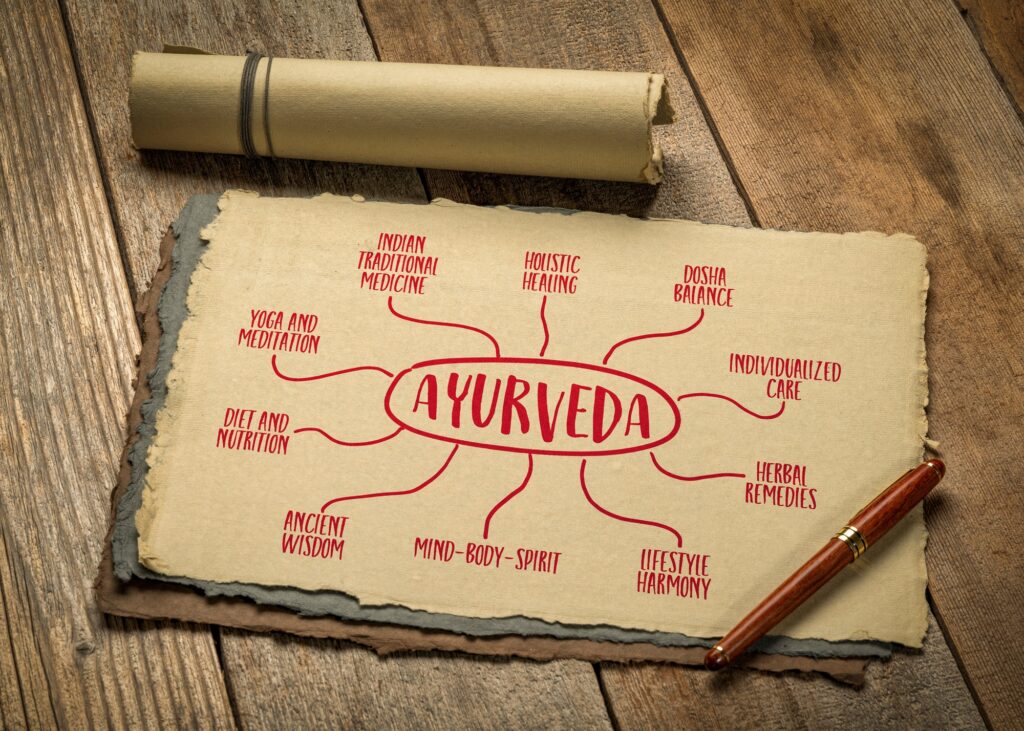
Ayurveda for Menopause: Understanding the Signs and Symptoms of Menopause
Menopause is one day – exactly 12 months after our last period. The years before menopause are known as perimenopause and after is postmenopause. It is a stage of life we are likely to be in for a long time, so it is important we seek sustainable ways to support and self-care.
In fact, according to the Australian Menopause Centre, women are likely to spend more than a third to 40 per cent of their life postmenopause. (1)
At this time in our lives, we are faced with a multitude of challenges – from work, finance, family and health issues – which all impact our mind and body and affect our hormonal balance. It is important we nurture and nourish ourselves, so we can feel calm, grounded and vibrant.
The Ayurvedic concept of energy and the doshas (Vata, Pitta and Kapha) help to explain this. It is believed there is an increase in Vata at this stage of life – which can increase dryness, poor sleep and anxiety, while raised Pitta levels can create more heat in the system, leading to hot flushes, irritability and mood swings. And kapha fluctuations can lead to weight gain, depression and a lack of motivation.
By seeing an Ayurvedic practitioner such as Mani, you can get a personalised Dosha consultation where you discover your own Prakriti – your natural constitution, the inherent qualities you are born with – which are believed to remain stable through your life and relate to your emotional, physical and mental characteristics.
You also discover your Vikriti – your current constitution – and this shifts over time and through life stages, depending on your lifestyle, stress levels, environment and diet etc.
In Ayurveda, it is believed the combination of Prakiti and Vikriti gives an insight into your own unique constitution and potential health issues. Once you know this, you work with an Ayurvedic practitioner such as Mani to create a wellbeing program to assist you with the signs and symptoms of menopause and how it presents for you.
Ayurveda recognises that stress can exacerbate menopause symptoms, so it promotes practices which focus on resetting the nervous system, encouraging deep relaxation and supporting emotional wellbeing – essentially pacifying the vata (movement/air) dosha to bring about greater harmony.

Natural Remedies for Menopause and Perimenopause That Feel Grounding and Sustainable
The great news about Ayurveda is that it is easy to integrate into your daily life. It’s about supporting your hormonal health and nervous system regulation with Ayurveda menopause remedies that are simple and sustainable.
Nutrition pays a big part in looking after your health – for example, eating and drinking warming drinks and easy-to-digest foods if you are feeling on edge or anxious. You can sip warm water during the day to stay hydrated and avoiding stimulants such as alcohol, caffeine and over processed foods.
We have a section on nutrition in the Thrive Journey site – so you can explore the best foods for your dosha.
Consistent daily routines – morning and evening
Ayurvedic Wellness rituals that support hormonal balance include a variety of natural wellbeing remedies, such as warm nourishing meals, consistent routines, sleep support and ways to reduce over stimulation.
Going to bed and rising at the same time is important.
In the morning, aiming to rise by 6am, using a tongue scraper to expel the ama (toxins) that can build up on the tongue overnight, sipping warm water with grated fresh ginger, meditating and practising gentle yoga to wake the body.
Spending dedicated time in the evening to winding down from the day, which can include; a warming milk drink with turmeric, journalling, having a warm bath and to promote sleep, or giving your feet a gentle massage with warm oil (such as olive oil or coconut oil for Pitta imbalance or Black Sesame for Vata imbalance).
Breathwork, Yoga and Qigong for Menopause Wellness
Our Thrive Journey practices of gentle yoga, Qigong, and mindfulness are all aligned with Ayurveda and supporting the mind and body with breath-led movement, helping with overall wellbeing and nervous system regulations.

Small Self-Care Habits That Make a Big Difference
Other supportive rituals include creating moments of calm throughout your day, taking rest without guilt and striving for consistency over perfection.
Menopause Wellness Starts With Listening to Your Body
Just like the seasons, we move through cycles in our lives. It’s important to be able to make the mind-body shift, so we are body aware and in tune with our energy levels.
Practising restorative yoga can help us listen deeply to our body – areas where we might hold tension, parts of the body which might need extra attention and being able to recognise when we need to rest rather than ‘push through.’
Studies have linked yoga helping to reduce menopause symptoms (2) with a decrease in insomnia and better-quality sleep. Another study by the International Menopause society found that one hour of yoga twice weekly may reduce the psychological and some of the physical symptoms experienced in menopause (3). Yoga has also been linked to a decrease in insomnia and better-quality sleep. (4)
It’s important to let go of unrealistic expectations and prioritise practices which are calming, sustainable and achievable. And to gather supports into your life for menopause wellness such as Thrive Journey.

Conclusion
Menopause doesn’t have to be a time of fear or trepidation, instead it can be a time of transformation. This is when women step into their power – honouring who they are, their body and their energy. Ayurveda for menopause recognises we are all different and encourages gentle, small wellbeing practices to nourish and nurture as we move through menopause and beyond.
Our Thrive Journey Menopause Life Stage features a range of holistic practices for peri and post menopause, including the opportunity to discover your Dosha with a personalised session with Mani, to attend live online Yoga for menopause and Qigong sessions with our experienced teachers, Sarah and Katie (who have also experienced menopause) and a range of Ayurvedic recipes and relaxations to help you feel calm, balanced and strong.
References:
1. The Australian Menopause Society
https://menopausecentre.com.au/blog/postmenopause-stage-of-life
2. Article: yoga for menopausal syptoms – a systematic review and meta-analysis
Cramer H, Peng W, Lauche R. Yoga for menopausal symptoms-A systematic review and meta-analysis. Maturitas. 2018 Mar;109:13-25. doi: 10.1016/j.maturitas.2017.12.005. Epub 2017 Dec 6. PMID: 29452777.
https://pubmed.ncbi.nlm.nih.gov/29452777
3. International Menopause Society
4. Women’s Health Research Institute