
The first month after childbirth is a kaleidoscope of different emotions, hormonal shifts and physical adjustments. Here’s our Thrive Journey guide to easing yourself into motherhood.
In some cultures the first month after childbirth is referred to as the “babymoon” – new mums stay in bed with their newborn for a month (only leaving to shuffle to the bathroom). But in our modern society, we can be tempted to book in appointments and start answering emails in between baby feed and sleep time.
In short – please don’t!
According to the World Health Organization, this precious postpartum period involves significant physical, hormonal and emotional changes requiring recovery and support (1).
Our Western world doesn’t value postpartum wellbeing enough, so let yourself feel comfortable with the idea of early postpartum care as a holistic approach to healing. Marvel at your body and baby giving yourself and your nervous system time to restore and repair.
At Thrive Journey we offer gentle, wellbeing support for this special time of your life in our motherhood Life Stage.
Week 1–2: Rest, Recovery and Nervous System Reset
Pregnancy has been compared to climbing up Mount Everest – and back down again. And that’s not even including the birth. Then there’s the sleepless nights, feeding your baby and the responsibility of caring for another life.
It’s no wonder our nervous system needs time to absorb this massive life change.
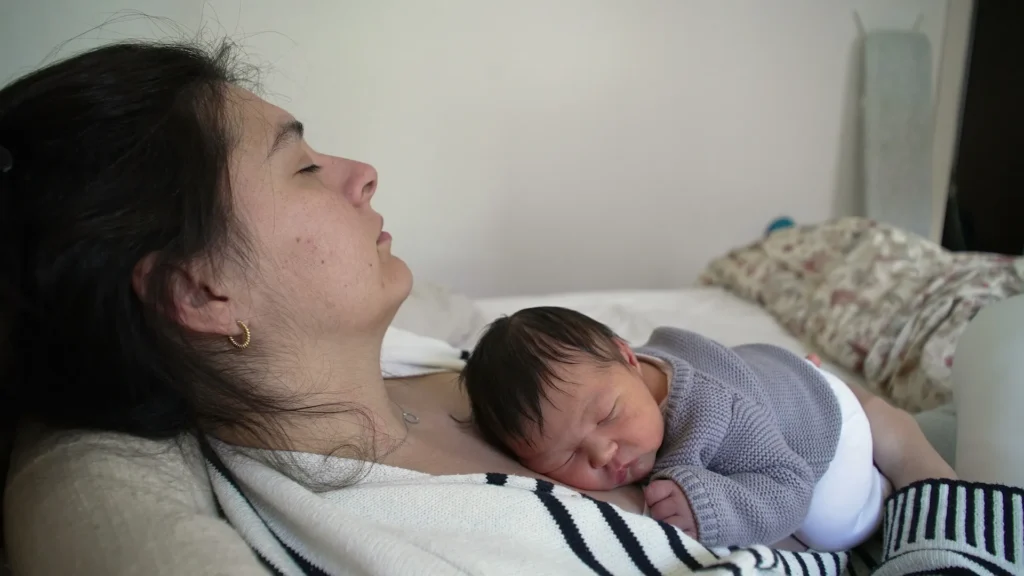
For new mother wellbeing it’s important to blank out your diary, limit visits from friends and spend this time transitioning slowly into this magical phase of motherhood. It’s a special time in your life which you’ll never get back. Fall in love with your baby, get to know his or her rhythms and enjoy time cuddling close – skin-to-skin.
Believe in your own tuition as a mother – often we are bombarded with advice, which is usually conflicting, so trust you are the best mum for your baby. And know there is no right or wrong, or perfect way to parent.
Give yourself that permission to slow down and minimise overstimulation – banish devices from the bedroom and make sure you have regular warm, cooked and nourishing meals – ideally choose from our delicious Ayurvedic recipe range as these will help to nourish all the tissues of the body and balance energy levels.
We breastfeed on average for around 8 hours a day in the first month (and yes, that is the same as a full-time job) but you are also on night duty – without a day off! So give yourself some time – pass your baby to your partner or trusted friend or family member and do some restorative yoga or soothing breathing practices to stay calm and centered.
Week 2–3: Rebuilding Energy Through Gentle Structure

This is the time you can start to slowly introduce a rhythm to your day – but remember gentle presence over productivity.
Feeding, resting and sleep cycles may start to become a little more routine now, but still be flexible as newborn babies don’t come with a manual. So don’t worry if it takes you all day to have a shower or you don’t return that text message. These things can wait.
After we give birth, our pregnancy hormones fall rapidly. Levels of progesterone, which helps us feel calm and relaxed and oestrogen, which supports mood, brain function and overall wellbeing, drop dramatically. This sudden hormonal shift contributes to what’s commonly known as the baby blues, leaving many new mums feeling tearful, emotional and more sensitive than usual.
And remember – the picture-perfect image of the mum with full make-up and the baby that never cries is an illusion. They say that comparison is the thief of joy, so make sure you don’t fall into the parenting traps of doubting yourself or feeling guilty.
Know that by showing up you are doing an amazing job every day as a mother.
Our emotional health is so important during this time – practise mind-body awareness techniques such as body scans, mindfulness and yoga nidra to help you tune in (not out!).
Week 3–4: Reconnection and Gentle Restoration

Our sense of self changes when we become a mother – in fact often it’s how we introduce ourselves to people and identify ourselves. We are now a mother or perhaps a mother of two or more children. We relate to ourselves, our partners (if we have one), our family, friends and work colleagues differently.
It is an adjustment for everyone, it is lovely to gift yourself simple postpartum nourishment practices and rituals such as enjoying a pot of tea in the afternoons, journalling before you go to bed in the evening – and giving yourself some sacred space and quiet time.
Your relationship with your body and energy is likely to change. It’s important to flow with your energy peaks and troughs and to listen to your body’s cues. Don’t feel pressured to “bounce back” to your pre-pregnancy shape.
Being mindful and self-aware will help set you up for your lifetime role as a mother – it’s a job that shifts and changes as your baby grows, but will always be demanding, so put these self-care practices in place now – your future self as a mother of teens will thank you for it!
How Thrive Supports Your First Month of Postpartum Nourishment

Thrive Journey is your perfect home studio and support network – with expert gentle, structured guidance for early motherhood. Support through yoga, breathwork and mindfulness as well as emotional wellbeing practices for regulation and grounding.
Research indicates that gentle and restorative yoga is helpful during the “fourth trimester” (the first three months following childbirth) (2). At Thrive Journey we have a course – yoga for mums and bubs with infant massage, to help you connect with your newborn while nurturing yourself. We also have live online classes with expert teachers to help personalise a sustainable recovery and fourth trimester support with kindness, compassion and non-judgment.
Conclusion
Set aside at least the first month for postpartum wellbeing, healing and gentle physical and emotional support. Prioritise rest, relaxation and nourishment naturally. And remember that small, consistent practices are more helpful than intensity.
Please reach out to us at Thrive Journey as we know how important this stage is to care for yourself, so you can create a sustainable postpartum recovery routine and care for your baby.
FAQs
Q: How can Ayurveda help with the first month of parenthood?
A: Ayurveda offers several practices to support recovery in the first month postpartum. Nourishment focuses on warm, easily digestible foods like kitchari for the first 10 days, when digestive fire (Agni) is naturally weaker, before gradually reintroducing richer foods. Daily self-massage with warm sesame or coconut oil supports both healing and detoxification, alongside keeping the body warm and prioritising rest.
Thrive Journey expert Mani Maran also emphasises the mental side of recovery: “Practice mindfulness and gentle awareness to everything in and outside of you to help control anxiety and remain grounded.”
Q: How can I start doing yoga as a new mum?
It’s generally advised to start yoga after around 6-8 weeks following a vaginal birth and 8-10 weeks following a c-section, but always check with your GP before resuming yoga or any exercise routine.
During the fourth trimester Restorative Yoga is a lovely practice – this is where you support yourself in gentle shapes such as Savasana using props like bolsters, blocks and blankets. And focus on long, slow, deep breaths which invite the body to gently release and reset the nervous system. Meditation and stress management is also really helpful. At Thrive Journey, we run Restorative Yoga live sessions with our expert teachers, where you are invited to begin to reconnect with your body without pressure.
Advice from our Thrive Journey yoga teachers:
“My pitfall during the postnatal period was tiredness and automatically reaching for coffee and sugars/simple carbs. This created a rollercoaster of energy and emotions. I’d advise any new mum to find better energy support, through rest, breathing, time in nature, taking a shower, stretching your neck and shoulders, moving the spine, time with a good friend, walking, quality nutritious food and choosing low glycemic carbs.” – Sarah Manning
“The best advice I ever received was from a lovely nurse who told me to sleep when my baby slept, not to worry about cleaning dishes, making beds or housework. I think being a mum has been my greatest achievement.” – Beryl Broadbent
References:
- The World Health Organization: https://www.who.int/health-topics/maternal-health#tab=tab_1
- Munns L, Spark N, Crossland A, Preston C. The effects of yoga-based interventions on postnatal mental health and well-being: A systematic review. Heliyon. 2024 Jan 29;10(3):e25455. doi: 10.1016/j.heliyon.2024.e25455. PMID: 38322903; PMCID: PMC10845905. https://pmc.ncbi.nlm.nih.gov/articles/PMC10845905
About the author
Katie is a mother of three, an Infant Massage Instructor, doula (birthing and new mum assistant) and author of Mother Me – a mum’s guide to balance, wellbeing and harmony.