
Prepare to discover the magic of the menstrual cycle – and why it is so much more than just your monthly period.
For so many women our menstrual cycle has been just that – our menses (or period). The 3-5 days when we bleed each month, struggle with tampons, wash out period knickers, have abdominal cramps and feel a bit… well, blah.
Then it’s over until it happens again about a month later.
Only that is just part of the picture.
There are actually four parts to the menstrual cycle: the menstrual phase, the follicular phase, ovulation and the luteal phase. And each of these stages has its own symphony of hormones which influence our mood, energy, brain function, metabolism and overall health.
By understanding the rhythm of our menstrual and hormonal cycle women can develop greater body awareness and appreciation of the female body. Plus it’s the perfect opportunity – if you have a daughter – to guide her on a journey of self-discovery and self-compassion.
What Is the Menstrual Cycle? Understanding the Basics of Women’s Hormonal Health
The menstrual cycle is a monthly hormonal process that prepares the body for potential pregnancy.
It involves the entire body – and includes multiple hormones communicating on a continual feedback loop with the brain and reproductive organs.
This results in fluctuations during the month as the body moves through the different stages of the female hormonal cycle. This constant rhythm of different hormone levels rising and falling, leads to constant change within our mood, energy levels and physical sensations – which is totally normal and healthy.
The Key Hormones That Control the Menstrual Cycle
The key menstrual hormones are Oestrogen, Progesterone, Luteinizing Hormone (LH) and Follicle-Stimulating Hormone (FSH).
Understanding the complex interactions – in particular the oestrogen and progesterone cycle – in women’s hormonal health gives you a deep appreciation of the female body.
Oestrogen
It can be helpful to think of oestrogen as the foundation or building block hormone. It is mainly produced in the ovaries by the developing follicles. It supports egg development, builds the uterine lining and influences mood, cognition and energy.
Low levels of oestrogen at the start of the cycle, stimulate the release of FSH which activates several follicles in the ovaries to begin maturing.
Higher levels of oestrogen in the middle of the cycle cause a rise of the luteinising hormone, which causes ovulation and then post ovulation. Oestrogen works with progesterone to boost the uterine lining. If there is no pregnancy, the oestrogen level drops and the period begins.
Progesterone
Progesterone is more involved in second half of the menstrual cycle (the luteal phase). Its main role is to thicken and maintain the uterine lining in preparation for a pregnancy, if pregnancy doesn’t occur, the levels drop and this signals the start of your period. Progesterone has a calming effect and promotes a slower, more reflective energy. This can help some women feel relaxed although for others it might make them feel a little low or tired. It also aids sleep.
Luteinizing Hormone (LH)
LH triggers ovulation around the middle of the cycle, which means a mature egg is released from the ovary. After this has happened, the LH then assists the emptied follicle to transform into the corpus luteum which produces progesterone.
Follicle-Stimulating Hormone (FSH)
At the start of the cycle, FSH stimulates a group of follicles in the ovaries to develop. Each of the follicles contains an immature egg. One follicle normally becomes dominant and so FSH assists this to fully develop while the others stop growing. As this follicle matures it produces oestrogen which works to build the uterine lining.
The Four Phases of the Menstrual Cycle Explained
As each of the hormones has a part to play in the female biological rhythm, this creates four distinct hormonal phases of the cycle.
Menstrual Phase
This is when there is no pregnancy and the uterus sheds its lining, it happens when the hormone (oestrogen and progesterone) levels fall. On the first day of bleeding this is known as Day 1 of the cycle and typically this lasts between 3-7 days and energy levels are low at this time.
Follicular Phase
This is when follicles in the ovary grow and mature, which begins on Day 1 of menstruation and ends with ovulation. Oestrogen begins to rise and often this results in women starting to feel their energy levels increase, it is also associated with an uplift of mood, motivation and focus.
At this time the brain and body are preparing for ovulation.
Ovulatory Phase
This is the mid-point of the cycle, when oestrogen levels (and fertility) peak and the egg is released. At this time many women experience feeling particularly energised, confident and sociable.
Luteal Phase
This is the latter part of the cycle when the body is preparing for a potential pregnancy. Progesterone levels rise, which can lead to feeling calm, but also creates a dip in energy levels. Some women may experience PMT (pre-menstrual tension) and feelings of irritability or emotional vulnerability. Physically this can lead to cravings, bloating or changes in sleep patterns.
How Hormone Fluctuations Affect Women’s Bodies
Menstrual cycle phases don’t just affect the reproductive system, they impact all the systems of the body. Some women are more sensitive to this than others so at certain times may feel more emotional or irritable.
In fact a 2022 US study showed strong evidence for increases in psychosis, mania, depression, suicide attempts and alcohol use during the menstrual and premenstrual phases, while anxiety, stress, and binge eating were elevated throughout the luteal phase.(1)
Generally oestrogen is linked with a more upbeat mood, sociability and stronger energy. This is because oestrogen also supports the ‘feel good’ brain chemicals such as serotonin and dopamine. In the luteal phase (with higher progesterone) our mood and energy can be a little low.
These hormonal shifts mean that at times it will feel easier to drop off to sleep and our quality of sleep will be affected. There are likely to be changes in appetite and metabolism – as our hunger and cravings can increase during the cycle.
Hormonal changes impact our focus, and our skin – as oil production, hydration and the likelihood of breakouts can also be affected. And as these hormones rise and fall this will influence the levels of our sexual desire.
Lifestyle factors and situations such as stress, sleep and health also play a big role.
How Hormones Influence the Brain, Mood, and Emotions
Hormones are like the body’s messengers – and the brain chemicals turn these messages into how you feel. But they’re also more than that, according to Jennifer Block, author of ‘Everything below the waist’. She states that hormones can cause tissue to grow or recede; determine the building or breakdown of muscle, bone and fat; convert glucose; affect blood pressure, pH and electrolytes; and determine sleep or wakefulness, hunger or satiation, euphoria or relaxation, fight or flight.
Think of the hormones moving through your body like seasons. As the seasons shift, it affects how you feel, this creates waves – sometimes the waves are calm and tranquil, and other times they can be stronger and more active.
As oestrogen rises it supports serotonin – which lifts mood and creates a harmonious feeling in mind and body. It also supports dopamine, which gives us that ‘get up and go’ motivation. Which is why at the beginning of the cycle you have a gradual build of energy, vitality and focus.
Then after ovulation, oestrogen levels lower as progesterone rises and this can lead to more introspection and fatigue.
Hormonal fluctuations during the menstrual cycle can impact a woman’s performance on tasks that require memory, attention, and cognitive processing speed, according to a 2025 study by Polish and Spanish researchers (2). They tested 71 young adults on a series of cognitive tasks and women were found to perform better on memory and attention tasks just before ovulation. The study also suggested that menstrual cycle changes could also help explain cognitive differences between women and men.
Moon phases and the menstrual cycle
The menstrual cycle has been compared to the moon phases and it’s easy to see how they mirror one another – both are around 28 days (the moon cycle is typically 29.5 days and the menstrual cycle on average 28 days). They follow a similar pattern and while they aren’t linked, the moon cycle can provide a beautiful visual reference for your own natural cycle.
The moon waxes and grows brighter, reflecting the follicular phase – this is said to be a good time to start new projects as there is a heightened energy. Then the full moon, when the light is at its fullest, reflects ovulation. Then the moon moves into the waning phase – the nights become darker and this is typically a time of reduced energy and reflection. The cycle culminates in the New Moon, which signals rest, reset and renewal.
Why Many Women Were Never Taught This
Until recently, the focus for research and education into women’s hormonal health has been on reproduction and menstruation. Hormone fluctuations in women – and the effects of the hormonal system on mood, energy and emotions – have been overlooked.
Many women have grown up with a lack of information about their hormones, which leads to confusion over normal body changes and fluctuations in mood and energy. There are also cultural barriers and stigma over the menstrual cycle, which has traditionally been referred to (and even dismissed) as ‘women’s issues’.
This has led to confusion about normal body changes for women, which is why it is important to highlight this topic and educate women (and men) on cycle awareness.

Why Understanding Your Hormonal Cycle Matters for Your Wellbeing
Understanding the hormonal patterns associated with the menstrual cycle is helpful on so many levels. Not only will it make you more body aware, but it will also boost general wellbeing. For example, knowing you are likely to feel tired in the lead up to your period – in the luteal phase – means you can adjust your lifestyle accordingly. At this time, you can cancel that power walk and book into a more relaxing and nurturing Restorative Yoga class! Check out our Thrive Journey Live Classes to find what suits you at the stage you are at.
It is also helpful if your family and friends are also aware of these shifts so they can be more understanding. Reminding yourself that these fluctuations in mood and energy are natural and normal promotes a stronger emotional understanding and resilience.

How to Start Understanding Your Own Hormonal Cycle
Start by tracking your periods – you might like to keep a diary or a note in your phone about how you feel on certain days of the week and start to pinpoint where you are at in your cycle. Learn about the different hormones and how they work together.
Over time, you may notice patterns in your mood and energy as well as physical symptoms. Approaching this with curiosity leads to you becoming in tune with yourself and starting to shift from your mind to a deeper body awareness.
When you know your own cycle, you have a better understanding of when to be assertive. For example, asking for a pay rise during your ovulation phase when you are likely to be more assertive and knowing to avoid confrontation during the luteal phased when you are more likely to rise to anger swiftly. Or when to simply curl up and find a cosy place to rest – during menstruation!
Common Myths About the Menstrual Cycle and Women’s Hormones
Bust those common myths about the menstrual cycle – there’s more to the menstrual cycle than just periods, and hormones affect more than just our mood.
The normal ups and downs of your cycle aren’t something need to be ‘fixed’ – they are a natural part of being a woman.
Understanding Your Cycle Is the First Step Toward Hormonal Health
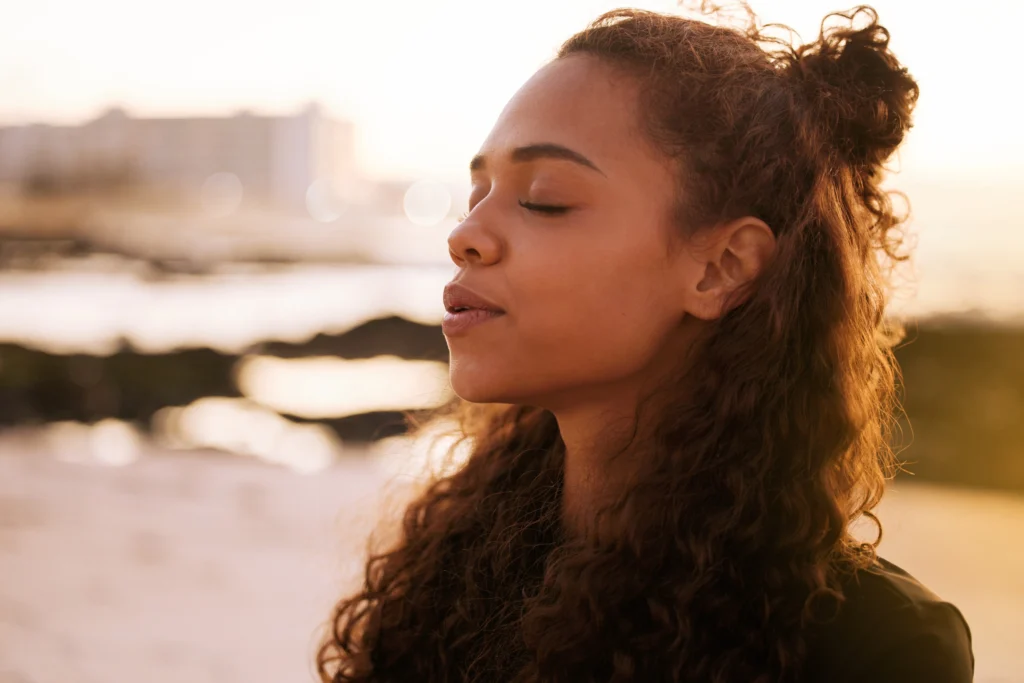
Hopefully by now you are feeling more connected to your cycle and ready to ride the hormonal waves with understanding and self-compassion.
Practises such as yoga can really help to support your emotional and mental health, Traditional Chinese Medicine and Ayurveda are particularly supportive. And understanding your cycle is a huge step forward in working with your body rather than against it.
Continue to read about your wellbeing, create a healthy template for your life, and learn about women’s reproductive health issues such as endometriosis and PCOS – and how you can naturally care for yourself.
At Thrive Journey we are here to support you through these natural changes. We have live online classes in yoga, Qigong, meditation and breathwork that can help you feel energised at the start of your cycle – and supported and nourished when your energy levels wane. We have women’s health experts and experienced yoga and Qigong teachers at the press of a button! Check out our on-demand programs – with 300+ videos full of health insights, guided relaxations and yoga routines for every stage of your hormonal cycle and every Life Stage.
References:
(1) Handy AB, Greenfield SF, Yonkers KA, Payne LA. Psychiatric Symptoms Across the Menstrual Cycle in Adult Women: A Comprehensive Review. Harv Rev Psychiatry. 2022 Mar-Apr 01;30(2):100-117. doi: 10.1097/HRP.0000000000000329. PMID: 35267252; PMCID: PMC8906247. https://pmc.ncbi.nlm.nih.gov/articles/PMC8906247
(2) Sawicka, A.K.; Michalak, K.M.; Naparło, B.; Bermudo-Gallaguet, A.; Mataró, M.; Winklewski, P.J.; Marcinkowska, A.B. Menstrual Cycle Phase Influences Cognitive Performance in Women and Modulates Sex Differences: A Combined Longitudinal and Cross-Sectional Study. Biology 2025, 14, 1060. https://doi.org/10.3390/biology14081060