
It’s time to strap in for the silly season – when we party more, eat more and drink more, but this excess can come at a cost to our digestive system. Check out our guide to a happy holiday tummy!
Christmas and New Year parties don’t have to mean feeling bloated, putting on weight or popping heartburn pills! There are some great yoga poses, mindfulness practices and healthy habits to help you have fun and not sacrifice your wellbeing.
In our Thrive journey guide we will show you poses for holiday overindulgence relief, heartburn prevention and mindful eating.
Why Holiday Digestion Needs Extra Care

Holidays are when we typically ease off our health regimes and tuck into richer foods and drink more alcohol. There’s more temptation and more invites filling your inbox.
In fact, a survey commissioned by King Edward VII’s Hospital in London in 2022, found that 35 per cent of those surveyed said that the festive season exacerbates digestive complaints. Six in 10 (61%) put festive digestive issues down to over indulgence, while 45% said the stress of Christmas was a factor in overeating.
But don’t worry, we’re not suggesting you wipe out your social schedule, but be careful with your choices, follow our wellbeing tips, yoga practices and factor in some recovery time.
The Science Behind Yoga & Digestion
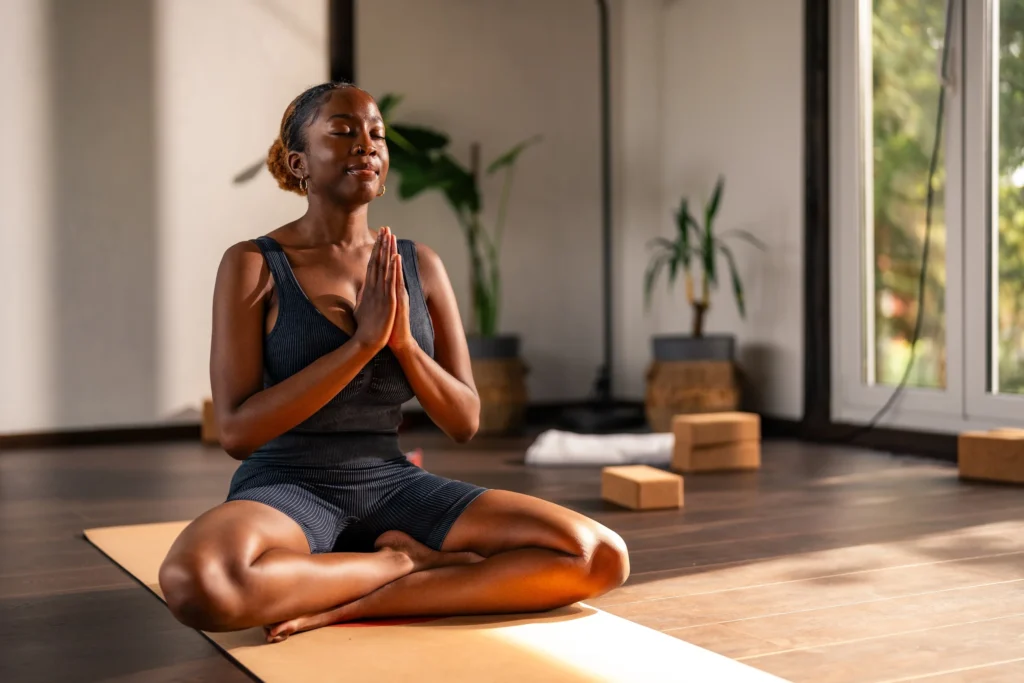
Yoga helps our digestion in many ways: firstly calming breathing techniques, relaxation and meditation help us to come into the parasympathetic nervous system – where our body begins to naturally heal, rest and digest.
This state also tones our vagus nerve. This is a the longest cranial nerve in the body and runs from the brain stem to the gut – sending messages to and from our gut and around the body. Think of it like a super highway through the body – sending messages from the brain to the gut and back again.
So when we are anxious we may feel “butterflies” in our tummy – leading to a burbling tummy, gas, stomach pains and possibly diarrhoea. But when we are relaxed – our abdomen also relaxes and we have better blood flow to the abdominal organs and a more efficient digestion.
This is when our body naturally heals and there is a good supply of fresh oxygenated blood to our internal organs and digestive system.
In this relaxed state the body releases digestive enzymes, helps maintain hormonal balance and inflammation is reduced. Check out our article on Restorative Yoga for more poses to promote deep relaxation, these yoga poses for anxiety, and grounding practices.
Yoga poses such as gentle twists and spinal flexion (think forward folds) followed by asanas which create an openness in the belly stimulate and massage the abdomen and internal organs. This increases oxygenated blood flow to the digestive organs – further enhancing efficiency of the digestion.
And if you do have a digestive disorder, don’t be embarrassed to discuss this with your GP or gastroenterologist. According to The American Gastroenterological Association (from data released in 2022) nearly 40% of Americans had stopped routine activities in the last year due to uncomfortable bowel symptoms, including exercising (19%), running errands (17%) and spending time with family and friends (16%). Despite this disruption, only 1 in 3 say they would only discuss their bowel symptoms if their doctor brought it up first.
Top 5 Yoga Poses for Holiday Digestive Health (digestive yoga poses)
Try these poses to help regulate and aid your digestion. The first four should be practised on an empty stomach.
#1: Seated Spinal Twist (Ardha Matsyendrasana)
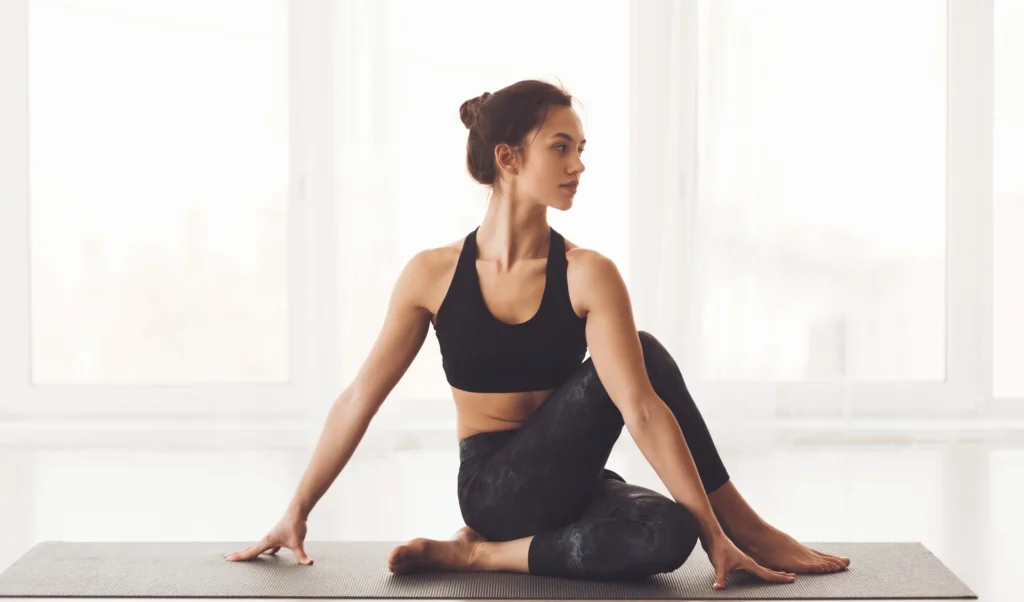
This pose gives a gentle massage to the abdomen and stimulates the digestive system. Do not practice if pregnant.
Sit with the spine long, shoulders relaxed and legs extended. You might like to place a folded blanket under your bottom to help feel a lift through the spine.
Bend your right leg and draw it up towards the body. If comfortable, place the sole of your right foot on the ground to the outside of your left thigh. Then raise your arms above your head and twist your upper body to the right, with the outside of the left upper arm against the right leg. Bring your right hand to rest at the base of your spine and then hold for 3- 5 breaths, feeling a lift through the spine on the inhale and a gentle twist on your exhale. Release back to centre, extend the legs and repeat to the other side.
#2: Cat-Cow Flow (Marjaryasana-Bitilasana)
This flowing movement creates an internal massage for abdomen, releases tension and aids posture.
Kneel, with your hands directly under your shoulders and your knees directly under the hips. On an inhale gently tilt the tailbone up and begin to extend the spine, gazing towards the top of your mat and then up towards the sky.
As you exhale, begin to tuck the tailbone down and move vertebrae-by-vertebrae until the chin comes towards the chest, arching the spine. Continue 5- 10 times
#3: Wind-Relieving Pose (Pavanamuktasana)
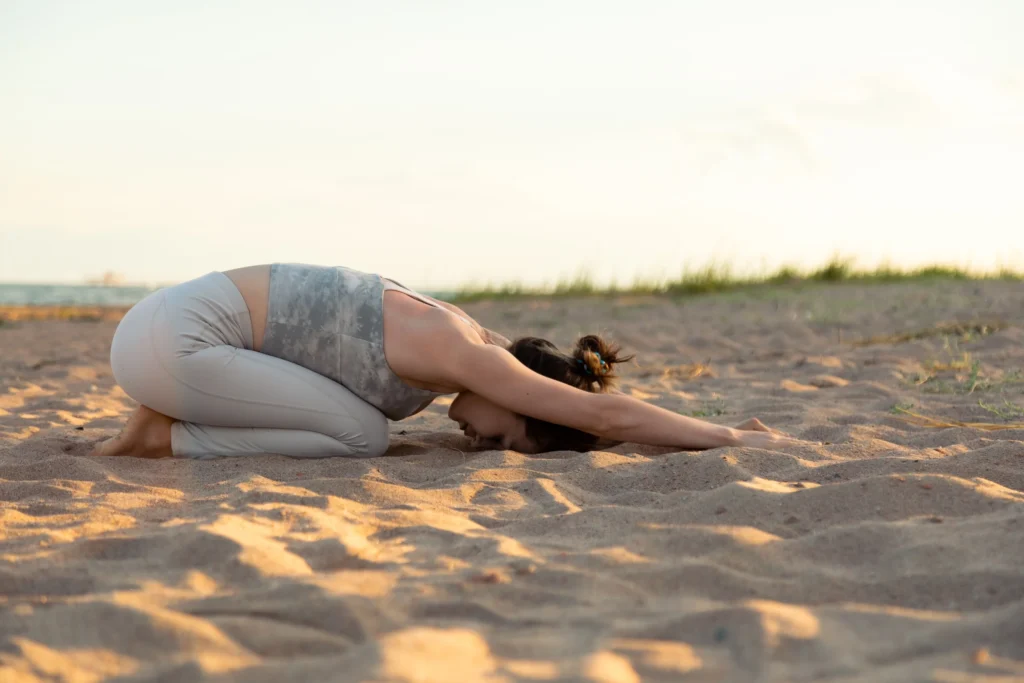
This gives a gentle compression to the belly, stimulating the digestion and relieving bloating. Do not practice if pregnant.
Lie on your back – with your legs extended, then bend your right knee and draw it up towards then armpit, repeat to the other side and then raise both knees up towards the upper body, hugging the and bend both knees, bent about hip distance apart. Then draw your knees up towards your chest. You can also rock from hip to hip and circle the knees.
#4: Bridge Pose (Setu Bandhasana)
This pose gives a gentle stretch to the abdominal muscles, a mild inversion and encourages the abdominal organs into alignment. Do not practice if pregnant.
Lie on your back with your knees bent – knees under hips and feet parallel slightly wider than the hips. As you inhale, lift your hips and engage your glutes to maintain the pose. Arms can stay beside your body, palms down or you can lift your arms up over the head. Holf for 5-10 breaths and repeat as desired.
#5: Reclining Butterfly
Too many mince pies or an extra serving of Christmas dinner that makes you feel more yeuch, yeuch, yeuch than ho, ho, ho?! Then try Reclining Butterfly to help ease digestion. This is one pose that can be practised after eating!
This pose is lovely to do on a recline, so if you have props, put two blocks under a bolster and place your bolster at an angle and then rest on top of the bolster. You can either stretch your legs out in front with a second bolster or pillow under the knees or place the soles of your feet together, with your knees open and creating a gentle stretch in the inner thighs.
Lean back over the bolster with your arms out to the sides, palms up and take long slow breaths, feeling your belly rise and fall with your inhale and exhale.
Stay here for as long as feels comfortable. This shape helps the body to relax, gently stimulates the digestive process and is unrestrictive for the belly.
Pranayama & Breathing Techniques for digestion

Away with the family? In the car stuck in gridlocked holiday traffic? Then don’t despair – you have your breath! Check out these great practices to soothe your stomach.
#1: Kapalbhati – shining skull
This is an energising breathing practice, so make sure you practice on an empty stomach and avoid if you have high blood pressure, recent abdominal surgery, menstruating or pregnant.
This pranayama helps to stimulate digestion and aids peristalsis – the rhythmic muscle contractions which move food down the digestive tract.
Sit comfortably, with the spine long, take a breath in and then exhale through the nose in short bursts, on each exhale draw the belly towards the spine as if “pumping” the breath out of the lungs. Continue for around 20 “pumps”.
Then take a recovery breath in and out and repeat for another 3-5 times. Stop and return to the natural breath if you feel at all light headed or dizzy.
#2: Dirga breath – three-part breath
When we are busy or stressed, we tend to take short, shallow breaths in the upper lungs. So try to consciously deepen the breath with Dirga or the three-part breath.
Sit comfortably and if you wish, place your left hand on your heart and your right hand on your navel.
As you take a breath in start to feel where the breath is in the body. You may notice the belly and rib cage gently expand and the sternum lift. Notice the pause at the top of the inhale and then release the breath and feel the ribs and belly release as the breath leaves the body. Gradually deepen the breath – feeling the belly, then the ribs then the upper chest filling the lungs and let it go.
The 3-part or yoga breath helps us to tune into the movement of the breath and gently deepen and expand the breath.
#3: Bhramari – buzzing bee breath
This is a tranquilising or soothing breathing technique which helps to calm the mind and bring the body into a state of relaxation.
Begin by placing the fingers over the eyes and ears – drawing your awareness from your external to your internal world.
Take a breath in through the nose and then with the lips lightly closed and teeth gently apart, hum the breath out.
Continue for at least 5-7 rounds and then place the hands on the lap or knees and take a few natural breaths noticing the effects of the practise.
For more breathing techniques check out our blog: Seven types of Pranayama
Six Mindful Eating Strategies for Holiday Meals

Prevent digestive discomfort this Christmas with these six mindful eating tips.
1: Avoid eating on the run, or while you are chatting as this can lead to indigestion, stomach pains and nausea.
2: If you can, take a few deep breaths before you take a bite – so you naturally slow your breath. This means your body is more relaxed which will aid your digestion.
3: Notice the aroma of the food, the anticipation and then take a small bite and notice the flavour of what you are eating. Let this flavour spread across the mouth and tongue, observing the texture and temperature of the food.
4: Chew slowly – at least 10 – 20 times each mouthful – savouring the food. When we eat mindfully in this way it helps the body prepare to digest the food and stimulates gastric juices and digestive secretions.
5: Wait before taking your next mouthful and remember that when we eat it takes around 20 minutes for our stomach to signal to our brain that it is full, so don’t eat until you feel full.
6: Remember that your stomach is roughly the same size as your fist – so try not to eat more than a fist sized portion of food for each meal!
For advice on what to eat, check out our guide to nutritional wellness.
Preventative Tips for Heartburn, Bloating & Indigestion (heartburn prevention)
- Sip safely! Avoid carbonated drinks – instead sip water before or during meals. Swap coffee and alcohol for peppermint or ginger tea to aid digestion.
- Alternate with water – if you are drinking alcohol alternate with soda or still water to help reduce alcohol consumption.
- Schedule alcohol-free days – it’s important to give your system a break and help the liver detox.
- Don’t eat too close to bedtime! Avoid eating 2-3 hours before you crash out, so keep the appetisers for the start of the night.
- Don’t drink on an empty stomach – we all know alcohol will have a stronger effect when we are hungry, the best foods before drinking include avocados, eggs and salmon as fatty foods and protein help you stay fuller for longer.
- Give your system a break! During party season make sure you have alcohol-free days and recovery time in your schedule, so you avoid burn out! Try some evening yoga and relaxing night time rituals.
- Green and clean – make a habit of reaching for the veggie sticks and dips rather than fatty, rich and spicy foods – which are all more likely to cause heartburn and indigestion.
- Follow the 1-2-3 rule – this says one drink per hour, two drinks per occasion and three drinks a day. (But include those alcohol-free days too!).
- Don’t top up! Keep focused on your drink and don’t let waiters or friends top up your drink – it’s much harder to notice your alcohol consumption when your glass is constantly being refilled.
Click here for more tips on achieving holistic wellness.
Integrating Ayurvedic Principles
In Ayurveda, agni (digestive fire) is the key to health. This means eating nourishing foods, avoiding icy cold food and drink (especially after warm meals), fried and processed foods and when possible eating for your dosha and the season.
And start the day with warm water, grated ginger and an optional squeeze of lemon and teaspoon of honey to help kick start your digestion for the day!
At Thrive Journey, we have a range of fabulous recipes crafted by our Ayurvedic expert Mani. Check them out HERE!
Practical Advice for Holiday Parties & Travel
Christmas, New Year and the end of year rush can be stressful. Work deadlines, family gatherings (that aren’t always happy and harmonious) and peak travel can combine to create holiday stress.
And we all know stress is linked to stomach jitters and butterflies, so plan ahead – buy Christmas gifts early, don’t feel obliged to say yes to every festive event and when possible, travel at off-peak times.
An article attributed to the gastroenterology and hepatology division at Northwestern University Feinberg School of Medicine in Chicago stated that 15% of the US population suffers from irritable bowel syndrome and that the stresses of the holiday period can exacerbate this, including travel to see family and relatives who were not sympathetic about IBS symptoms.
If you are feeling overwhelmed, go for a walk, keep up your yoga and meditation – as this is the time when it is more beneficial than ever! Check in with our fabulous online yoga classes – so you give yourself regular time out to pause, reflect and restore.