
Tight neck and shoulders, feeling flat or tired from being hunched over your desk or overwhelm? Then heart opening yoga poses are your go-to moves. Check our guide to find out more.
When we are stressed and fatigued we have a natural tendency to slump – our shoulders round, our chin can push forward (creating tension in the back of the neck) and add pressure to our spine. Blood flow can be restricted and our lungs aren’t able to expand fully to accommodate the breath.
In this position our energy slumps which can affect our mood – leading to us feeling deflated and depressed.
But by practising regular heart openers we can improve our posture and in turn our circulation, mood, respiratory system, immune function and reduce muscle tension.
A review of literature by US heart specialists found evidence that yoga could help cardiovascular disease prevention, by helping control risk factors such as blood pressure, blood sugars and cholesterol. (1)
The key to practising is to be gentle and mindful with your practise.
How Often Should You Practise Heart-Opening Yoga?
It depends on your intention. For a daily practice, you can do a gentle morning stretch to greet the day and a restorative pose at the end of the day (see below). If you are keen to have a more dynamic workout, then aim for a yoga sequence of around 20 minutes around three times a week.
Morning heart opener

Think of this as an extended stretch! From standing, inhale, interlace your fingers, turn your palms up and raise your arms above your head. Take a breath in and as you breathe out, consciously soften your shoulders away from your ears. Then place your palms together with your index fingers together with all other fingers interlaced – this is Kali Mudra. Inhale, feel a length in the spine, engage your core and gently draw your arms behind you keeping your upper arms in line with your ears. Feel your chest open and create a gentle arch of your back. Take three breaths here and then repeat as needed.
Evening restorative heart opening pose
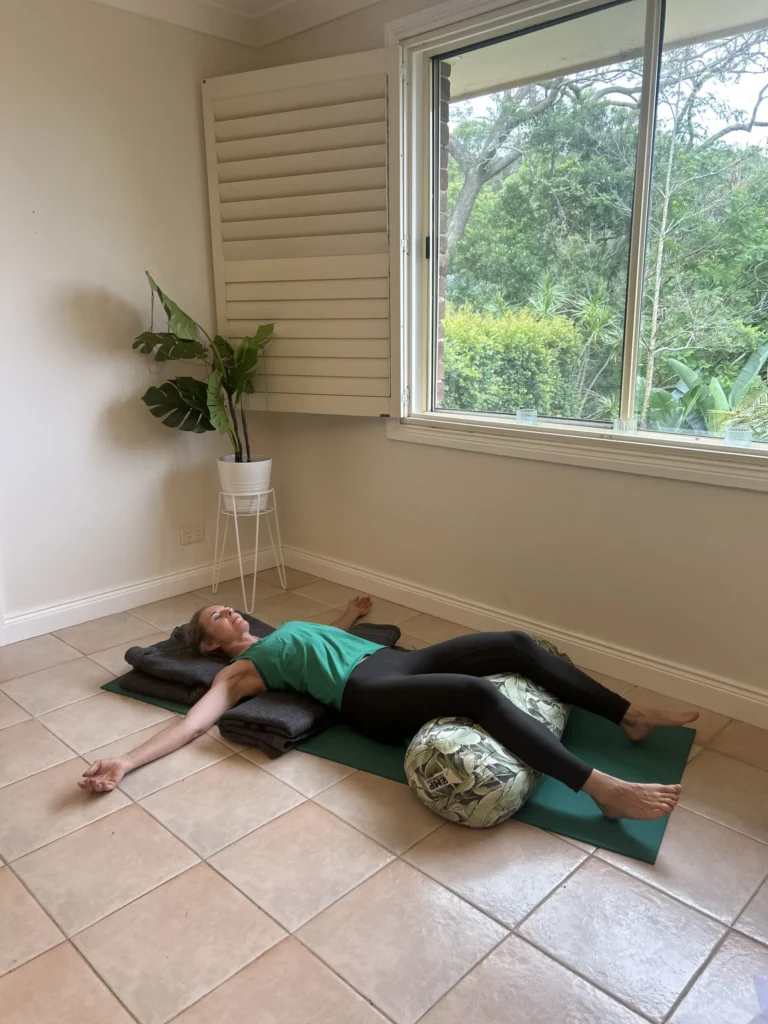
Lie down with a bolster under your knees and feet about hip distance apart. Place one or two blankets horizontally at the thoracic area of the spine – the top of the blanket will line up around the base of the armpits. You may need to spend a few moments adjusting the props slightly to create comfort within the pose. Then place the back of the head onto a folded blanket. Ensure the chin is marginally below the height of the forehead and take arms out to the side, palms facing up. Spend at least five minutes resting here, taking long, slow breaths.
Why Frequency Matters More Than Intensity in Heart-Opening Yoga
Regular practice is better than a less frequent stronger workout. By doing gentle heart openers daily you are inviting your body into a more passive and less intense shape which guides the body into a better alignment, reducing the risk of injury and is less overwhelming emotionally.
Heart-opening yoga postures such as backbends have been discussed in yoga literature for both physical and emotional benefits. According to an article in yoga practice and philosophy website The Path of Light, opening the chest helps counteract forward-slumped habits, which can improve lung expansion and oxygenation and support better circulation, as well as leaving students more energised and positive. (2)
Our heart is the home to our Anahata Chakra – our heart energy centre and in TCM it is believed the heart houses our shen or spirit. When we open our heart then this can stir up emotions, so it is best to work gradually with mindfulness and compassion.
How Often Should You Practise Heart-Opening Yoga?
Gentle heart openers (like the ones described above) can be practised daily, but it is a good idea to have a rest day between more intensive heart-opening yoga sessions.
If you do too many heart openers, then you risk feeling over stimulated. It is a good idea to follow heart opening poses with shapes which counterpose, such as forward folds and inversions (such as child’s pose, downward facing dog or lying prone in Advasana – with your face turned to one side, your arms beside your body palms facing up).
Heart openers can also release sensations and emotions that we may have been holding on to – perhaps even subconsciously. Once we start to practise opening and expanding the chest in thisway, then these emotions can shift and it is not uncommon to cry or feel a sense of “letting go” of past traumas, sadness or grief. Move gently and practise with a qualified yoga teacher or therapist.
If you are trying for a baby, pregnant or post-natal, then follow restorative heart opening poses.
How long should each heart-opening yoga session be?
Each day our experience will be different depending on how we are feeling physically, energetically and emotionally.
Start with a short practice to centre
- Sit comfortably, with your spine tall, take a few deep breaths and then turn your focus inward. Notice how are you feeling – suspend judgment as you do an internal body scan and then pay attention to how you are feeling emotionally and where your energy levels are.
- Based on how you are feeling, adapt your routine to be gentle or more challenging.
- Continue to check in as you practice and rest as needed.
- And at the end of your heart opening practice, finish with a few deep breaths or if you have time, a guided relaxation.
FAQs
How do I know if I’m practicing too much or too little (signs of overtraining)?
Physically you may find that you are experiencing fatigue or muscular pain in your chest, back or shoulders. Another sign is if you feel you are not progressing in the poses, that your body is becoming a bit stiffer rather than increasing flexibility.
Yoga is about tuning into your body – deep listening and responding to sensations within the body rather than being caught up in our heads. Our minds can sometimes cause us to push harder, overriding pain and fatigue, which risks injury and exhaustion or on the flipside we might be tempted to give up and stop. Continue to observe your body – paying attention to signs of fatigue or noticing if you are giving into lethargy and not practicing enough.
How long before I see results from regular heart-opening practice?
It’s not just about seeing results with heartopeners, but feeling results. Emotionally you may start to feel a little happier, more positive and upbeat. Energetically heart openers increase and strengthen our energy – a bit like recharging yourself as you would your phone! And there are many daily heart opening yoga benefits – physically heart openers can encourage a deeper breath, reduce neck and shoulder tension and release back pain, increase circulation and give a gentle massage to internal organs and the abdomen.
Heart opening yoga is also helpful for posture correction – particularly helpful for correcting a hunched posture with rounded shoulders.
You might find these results happen immediately or take a few weeks – there are no hard and fast rules. This is why it is important to start listening to the wisdom of the body.
Can I combine heart-opening yoga with other exercise routines and how?
Absolutely! By now you will have gathered that with heart opening yoga poses are soft, feminine and intuitive. They can be a standalone practice or used as a gentle warm up or cool down before or after another exercise. For example, you might like to do a heart opener before going for a run or swim – to help mobilise the body and deepen the breath.
After exercising you can do heart-opening yoga to stretch out the upper body and allow the heart rate to regulate and help post-exercise recovery.
How do I progress gradually with heart-opening poses to avoid strain or injury?
Follow these guidelines to help deepen your practice safely. And when possible, attend a class with a qualified yoga teacher. Don’t forget at Thrive Journey, we run live and online yoga classes so you can get personal attention. Visit Thrive journey to find out more.
1. Make sure you are warming the body before engaging in heart opening yoga poses and back bends.
2. Move within your comfort limits and continue to “check in” with yourself – think of guiding your body gently into positions rather than forcing the body
3. Use props when needed – this could be a folded blanket place under the mid back – line up the smooth edge of the blanket with the base of the shoulder blades or bra strap area, for a passive and gentle heart opener. Lie on your back, with your head on a blanket or pillow and extend your legs with a bolster under the knees. This is a gentle, restorative heart opener.
4. Think of lengthening the body into a crescent shape – the idea of heart opening yoga poses is to expand and create space in the body rather than to achieve a pronounced curve of the spine.
5. Practice mindfully – always checking in with what feels comfortable, rather than forcing your body into positions which are too strong.
6. Keep your shoulders soft, your core strong and your neck in alignment with your spine.
What does “as often as you feel the need” truly mean in practical terms for emotional healing?
Yoga is about tuning into our body, energy and emotional rhythm rather than following a prescriptive set of exercises. This is one of the main benefits of the practice as it is about coming out of your head and into your body. Most of us in our busy, Western lives are constantly thinking about what we have done, what we are doing and what we need to do. Our heads are busy places where we can get caught up in a maelstrom of thoughts. And not all of these thoughts are positive. If we allow ourselves to stay in our heads then we aren’t able to connect as well with our body.
Our bodies store emotions and have a myriad of sensations that when we tune into these we can shift our awareness and engage not just with ourselves, but with the energy around us. We start to become more present and mindful.
One of the main themes of yoga – according to Patanjali’s Yoga Sutras is: “Yoga is the cessation of the fluctuations of the mind.”
So by shifting awareness from the mind to the body, we start to pay attention to what it is we are feeling. And once we do this, then we can start to heal on an emotional level.
With regular practice, with a qualified teacher, you can truly explore this concept.
Simple heart opening routine for beginners and busy professionals
Here are three yoga poses to help open your heart and still your mind.
Cat Pose (Marjariasana)
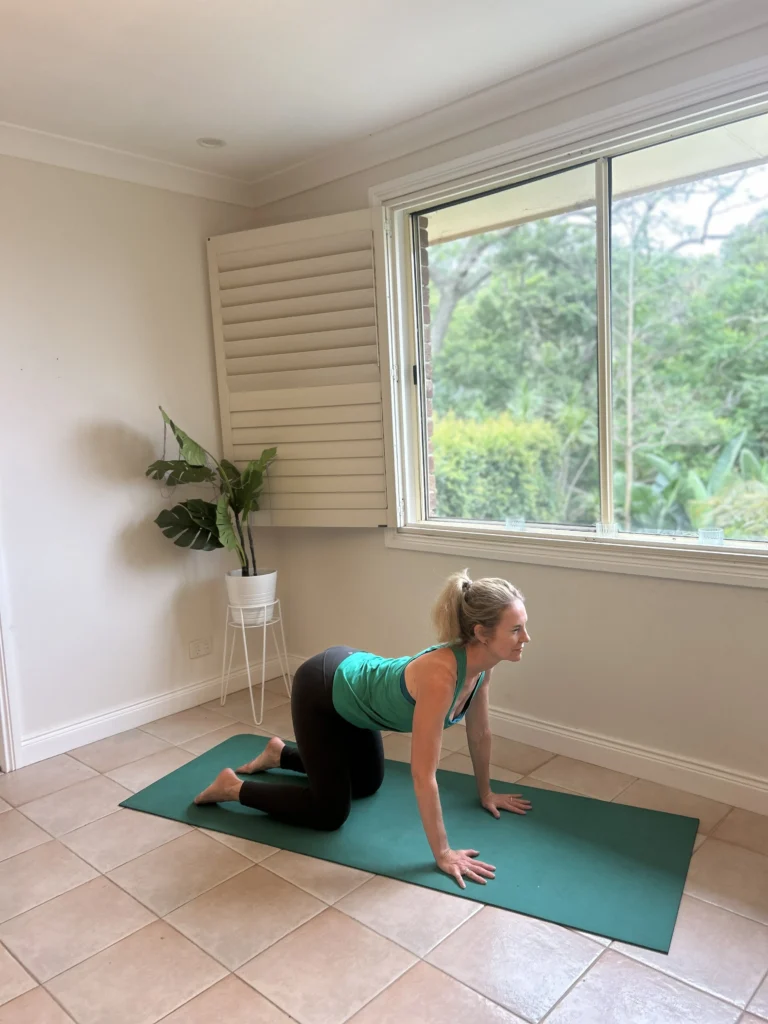
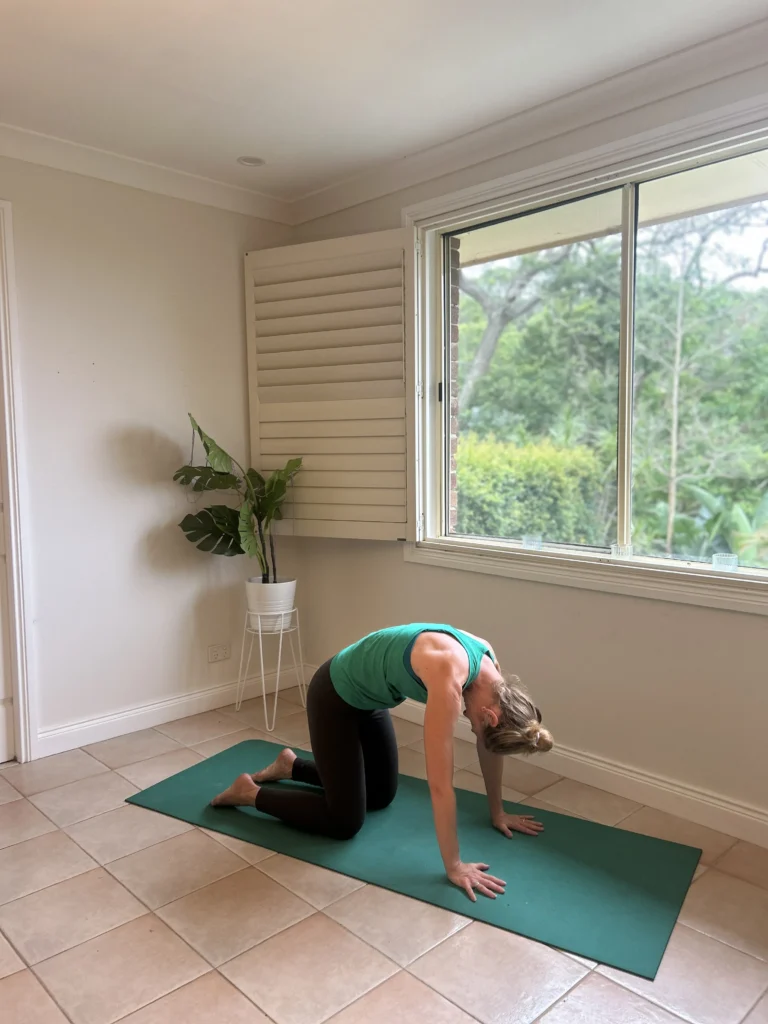
This is movement helps to mobilise and gently warm up the spine. From kneeling, tuck your tailbone under and begin to round your spine on your exhale, finishing with your chin towards your chest and arching the spine like an angry cat. Then moving from the tailbone, uncurl vertebrae-by- vertebrae looking forward and then up towards the sky. Feeling the heart centre gently open and expand. Repeat 10 more times.
Crescent Lunge (Anjaneyasana)
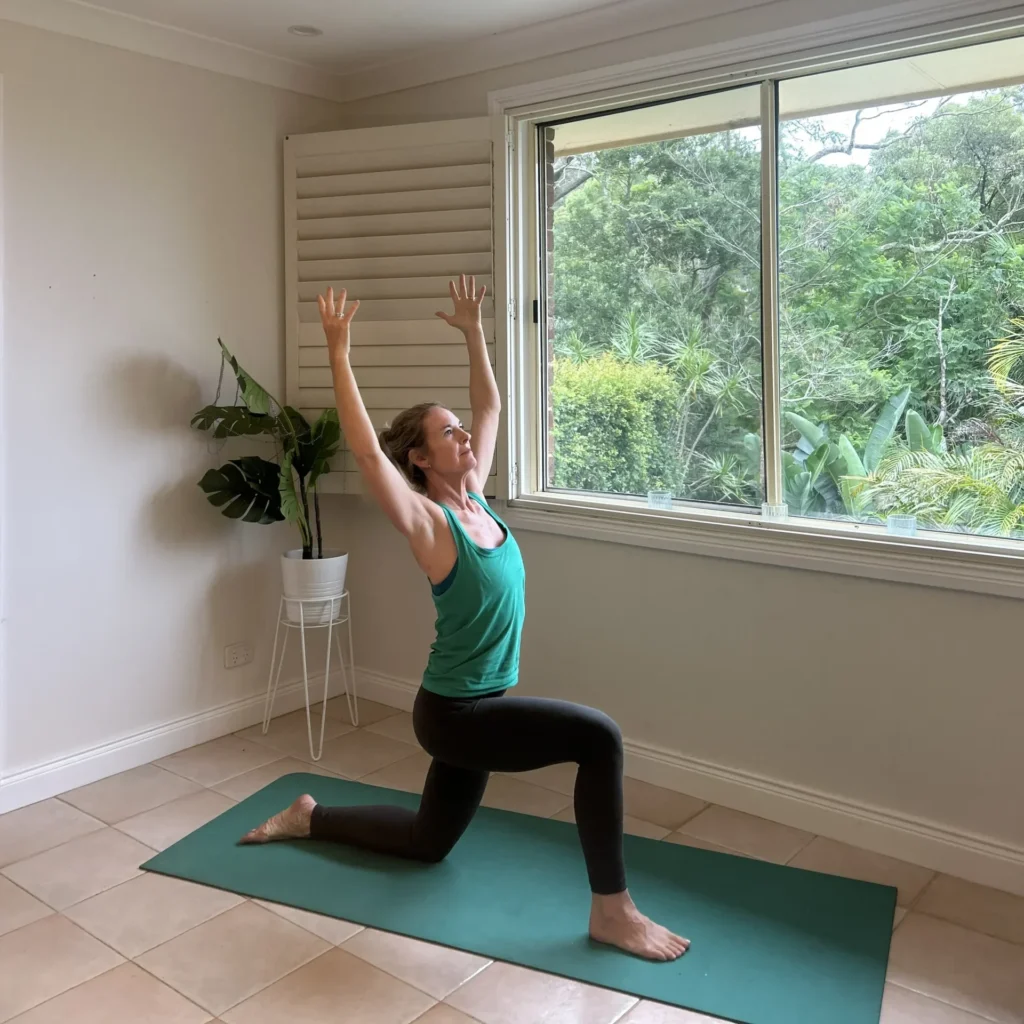
From table top (on all fours), step your right foot forward and place your heel under your knee. Then sweep your arms forward, keeping your shoulders relaxed and do a gentle back arch and your raise your gaze above your eyeline. Arms are shoulder width apart. Imagine you are holding a big beachball and about to throw it across the room. Take five deep breaths here and then repeat to the other side.
Sphinx Pose (Salamba Bhujangasana)
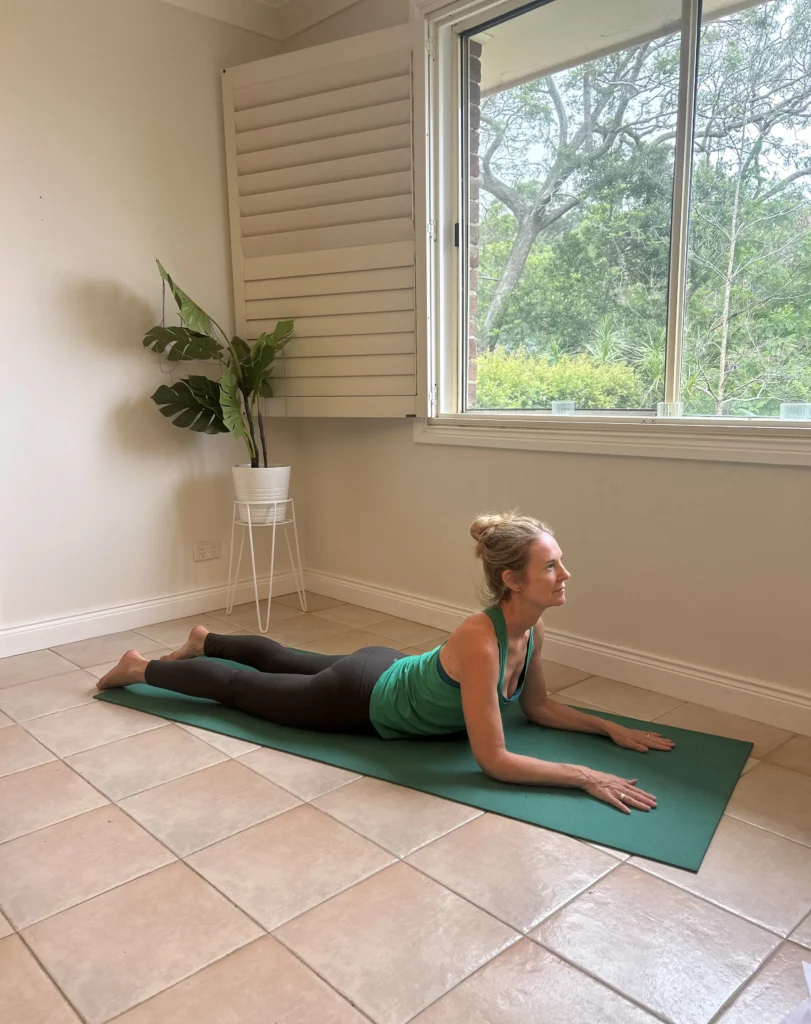
Lie on your belly and bring your hands under your shoulders, elbows close to the rib cage. Then slide your forearms forward, so your elbows are below your shoulders. Hands are in line with your elbows. Then, as you inhale, press your feet gently into the mat and raise your head, chest and shoulders. Draw your shoulder blades down and feel an openness in your heart centre. Take three breaths and then lower back to the mat. Repeat five times.
Ready to unlock your heart’s potential? Start your personalized heart-opening yoga journey today. Find a qualified instructor, explore online classes, or try a short sequence at home with Thrive Journey
References:
- Ameesh Isath, Arjun Kanwal, Hafeez Ul Hassan Virk, Dhrubajyoti Bandyopadhyay, Zhen Wang, Ashish Kumar, Ankur Kalra, Srihari S. Naidu, Carl J. Lavie, Salim S. Virani, Chayakrit Krittanawong, The Effect of Yoga on Cardiovascular Disease Risk Factors: A Meta-Analysis, Current Problems in Cardiology, Volume 48, Issue 5, 2023 https://doi.org/10.1016/j.cpcardiol.2023.101593, https://www.sciencedirect.com/science/article/pii/S0146280623000105