International Women’s Day is a great opportunity to drill down on women’s health and wellbeing. Explore the important physical and mental health issues females face – and consider why women’s health is still under researched and underfunded.
Historically women have been excluded from medical research and clinical trials. It might seem ludicrous to us today, but right up until the 1990s women were seen as “small men” and omitted from research. This was for a variety of reasons including the risk of pregnancy, hormonal complications and the fact it was just assumed that male results would apply to both men and women.
But as we know women are different to men! And it’s not just down to the birds and the bees… Women have profoundly different hormonal interactions than men, this together with the differences in body/fat ratio and a range of other mental and physical variations means women will react differently to medications and won’t always show the same symptoms as men.
In fact American research (1) found that women have double the number of adverse reactions to medications than men due to the lack of women’s results in clinical drug trials.
Why Women’s Health Deserves Our Attention
The good news is there have been positive shifts in research and funding for women’s health, but there’s still a way to go…
It is now recognised that women’s health is centered around hormonal balance – the key phases are the menstrual cycle, pregnancy and post-natal and peri and post menopause – in line with our Thrive Journey life stages.
Medical research that doesn’t track women’s menstrual cycles or leaves out groups of women entirely, risks missing essential information for women on the effectiveness of medications, injury recovery and the perception of pain.
Women also have different symptoms to men across a wide variety of mental and physical conditions. For example women are more likely to have nausea, extreme tiredness, breathlessness, back and jaw pain if they are having a heart attack, rather than the classic symptom of intense chest pain.
Women are also likely to show different behavioural symptoms of conditions such as ADHD and Autism. This leads to the risk of women being misdiagnosed, delayed diagnosis or simply dismissed.
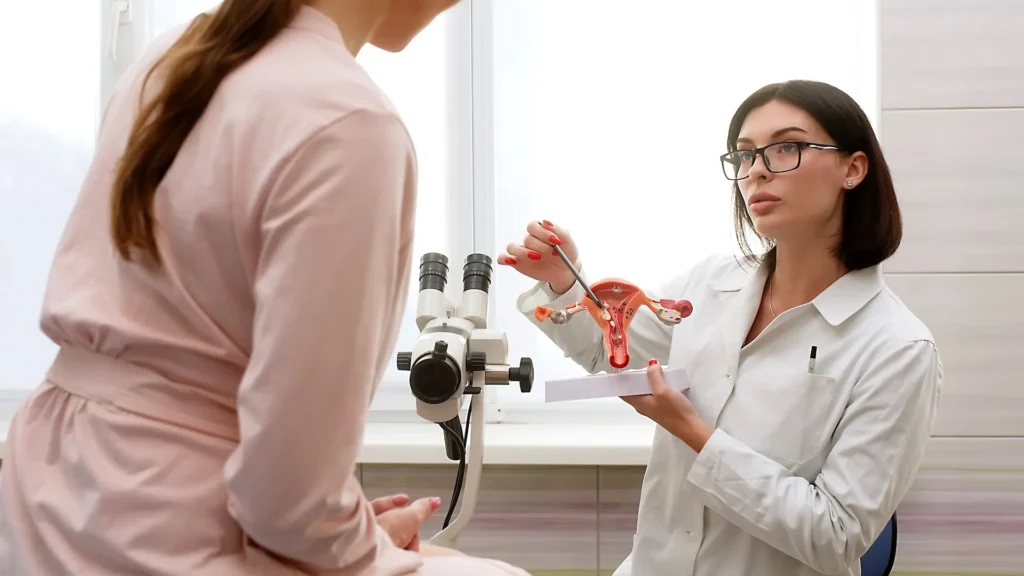
Conditions affecting women’s reproductive health has also been under represented in studies. For example, according to the World Health Organisation (WHO), Polycystic Ovarian Syndrome (PCOS) affects around 10-13 per cent of reproductive-age women and yet around 70 per cent of women are unaware they have the condition. (2)
This affects PCOS and Endometriosis awareness and this lack of Women’s healthcare research can lead to a delayed diagnosis, directly impacting women’s physical and mental wellbeing.
Understanding the Current State of Women’s Health Research
It’s only in the past 40 years or so that women have been included in medical research.
The pivotal moment was when the National Institutes of Health (NIH) – a primarily US organisation – began promoting the inclusion of women in health studies. This led to the formation of the Office of Research on Women’s Health (ORWH) in 1990. A year later the Women’s Health Initiative was launched to focus on issues such as heart disease and osteoporosis in post-menopausal women.
Then in 1993, the US congress passed the NIH Revitalisation Act which made it illegal to exclude women and minorities from clinical research. This created a global precedent and led to other countries around the world including women in medical research.
To date there has been more research. There’s been an increase in sex specific data and more research into specific female health issues, but women are still under represented in clinical studies. A study by the Harvard Medical School, in 2022, found that as late as 2019 women were still substantially underrepresented in clinical trials for leading diseases. (3)

Women’s Mental Health in 2026: What You Need to Know
Anxiety, depression and stress is typically higher for women than men. Research by the Australian Bureau of Statistics (ABS) (4) found that women are more likely to suffer with mental and behavioural issues than men (22.3 per cent compared to 17.9 per cent). The research also found women are one and a half times more likely to have an anxiety related condition compared to men (15.7% compared with 10.6%).
This is likely due to hormonal fluctuations and lifestyle factors – where women usually take on the responsibility of being care givers. Women are more likely to have financial concerns and the toll of domestic violence and abuse. In this article, our Thrive Journey Yoga and Qi Gong expert, Sarah Manning talks with naturopath, Jennifer Eisenacker on the impact of trauma on women’s health.
Key stressors in life stages can also contribute to fertility concerns, the grief of miscarriage, the huge impact of becoming a mother and the hormonal impact and symptoms of menopause.
How Women Can Support Their Mental Wellbeing
There are many ways women can support mental wellbeing, but often it is a shift in attitude that is needed. It’s important to view mental health as a priority – to take time out to ensure you are feeling heard, nourished and well rested.
But women have a tendency to push through rather than step away from their seemingly never ending stream of jobs and chores. This overwhelm and busyness can lead to chronic stress, poor sleep and impact mental health and wellbeing.
The first thing is to recognise the importance of mental health and to factor time, energy and resources to promote this vital area of wellbeing.
For every woman this will be different – it could be joining a community group, seeing a counsellor, attending a retreat, booking into meditation or yoga classes.
This doesn’t need to be expensive or inconvenient.
At Thrive Journey we offer self-care for women with more than ten live, online classes a week – connecting you instantly to a supportive community and expert yoga and Qi Gong teachers from the comfort of your home.
Increasingly, work places are offering mental health resources and even mental health days where you can take a rostered day off. Ask your HR department representative about this.
Women’s Physical Health Today: Challenges and Solutions
Women face a number of health challenges including hormonal changes, chronic illness and autoimmune disorders such as Rheumatoid Arthritis – which is three times more common among women than men. Other key concerns include heart disease, which is the leading killer for women globally (5) and cancers (in particular breast, lung and colorectal).
Menopause is another key area, especially as we are an ageing population. It is estimated that on average, women spend around a third to 40 per cent of their lives in post-menopause. Check out our life stages in the Thrive Journey programs – especially menopause and Wise Woman.
Women typically live five years longer than men, but most of those years are spent living with diseases or poor health, such as post menopause disorders which are not treated, arthritis, chronic pain, osteoporosis and dementia. So even though women are living longer, they are often not enjoying a good quality of life for longer.
It’s important that women prioritise their own wellbeing including nutrition, sleep, physical activity, such as yoga and preventative care. Check out the Eight Pillars of Wellness for more on this.
Understanding self-care is not a luxury, but a necessity. Taking time out for rest and relaxation, walks in nature and activities that reset the nervous system, such as yoga and Qi Gong.
At Thrive Journey we have weekly, live online classes you can book into – to make caring for your physical and mental wellbeing affordable, easy and convenient.

Taking Action: How Women and Communities Can Make a Difference
The World Health Organisation has highlighted the need for gender equality in health, stating: To create truly equitable and effective health systems, women must be at the forefront – not just as caregivers but as leaders and decision-makers. (6)
It is imperative women take charge of their health – not just on a personal level, but advocate and join community groups to help promote women’s health and wellbeing.
Governments need to fund research and companies need to adopt workplace wellness programs. Thrive Journey has a corporate wellness package.
There needs to be equitable healthcare access for all women across all demographics.

Conclusion: Celebrating Progress and Taking Action
International Women’s Day can be a pivotal opportunity to inspire change and track progress.
Let’s all highlight the importance of women’s health by taking care of women’s mental and physical wellbeing, supporting community initiatives and encouraging our politicians and healthcare providers to work towards erasing the gender health gap.
Quick Answers to Common Women’s Health Concerns
Can yoga and meditation really improve women’s health?
Research has shown that yoga can help wellbeing by a range of benefits including supporting good health habits, improving mental health and promoting sleep. (7) Check out our Thrive guide for how yoga can help mental health.
What are the most common physical health challenges women face today?
Many women are surprised to learn that heart disease is one of the leading causes of death for women globally. Make sure you stay on top of your cardiovascular health.
Reproductive health is also a priority – conditions such as PCOS and endometriosis both affect around 10 -13 per cent of women of reproductive age worldwide (2 and 8).
Research published in the journal of Clinical Investigation states that women are more than twice as likely as men to be diagnosed with an autoimmune condition. Conditions such as: Rheumatoid arthritis (women account for 74% of cases), autoimmune thyroiditis (85%) and multiple sclerosis (71%). (9)
How do mental health issues affect women differently than men?
Women are more than three times more likely to be affected by mental health issues such as anxiety, depression and eating disorders than men (10). This can be due to hormonal imbalances, social expectations, care giving roles and high levels of stress.
How can women take care of their mental and physical health proactively?
Find a regular GP and keep up to date with medical checkups and screenings.
Make sure you focus on the foundations of Women’s health and wellbeing. This includes quality sleep, nutrition, exercise and movement, taking care of your mental health with mindfulness practices and restorative yoga. And ensuring you have a good support network and professional health team.
At Thrive Journey we have a library of health resources including pre-recorded Yoga and Qi Gong classes, live classes and Ayurvedic-inspired recipes.
We have expert health professionals – who are real women, with lived experience – to help support you from the comfort of your home.
References:
- University of California – Berkeley. “Lack of females in drug dose trials leads to overmedicated women.” ScienceDaily. ScienceDaily, 12 August 2020. https://www.sciencedaily.com/releases/2020/08/200812161318.htm#google_vignette
- World Health Organisation: https://www.who.int/news-room/fact-sheets/detail/polycystic-ovary-syndrome
- Enrolment of female participants in United States drug and device phase 1–3 clinical trials between 2016 and 2019, Contemporary Clinical Trials, Volume 115, 2022, 106718, ISSN 1551-7144. US medical study (Boston): Alexandra Z. Sosinsky, Janet W. Rich-Edwards, Aleta Wiley, Kalifa Wright, Primavera A. Spagnolo, Hadine Joffe. https://doi.org/10.1016/j.cct.2022.106718 (https://www.sciencedirect.com/science/article/pii/S1551714422000441)
- Australia Bureau of Statistics: https://www.abs.gov.au/statistics/health/mental-health/mental-health/latest-release
- US Centers for Disease Control and Prevention https://www.cdc.gov/womens-health/lcod/females.html
- World Health Organization update: https://www.who.int/news/item/06-03-2025-building-a-healthier-world-by-women-and-for-women-is-key-to-achieving-gender-equality
- National Centre for Complementary and Integrative Health (US Dept of Health and Human Services): https://www.nccih.nih.gov/health/yoga-effectiveness-and-safety
- World Health Organization fact sheet: https://www.who.int/news-room/fact-sheets/detail/endometriosis
- Estimation of prevalence of autoimmune diseases in the United States using electronic health record data. Aaron H. Abend, Ingrid He, Neil Bahroos, Stratos Christianakis, Ashley B. Crew, Leanna M. Wise, Gloria P. Lipori, Xing He, Shawn N. Murphy, Christopher D. Herrick, Jagannadha Avasarala, Mark G. Weiner, Jacob S. Zelko, Erica Matute-Arcos, Mark Abajian, Philip R.O. Payne, Albert M. Lai, Heath A. Davis, Asher A. Hoberg, Chris E. Ortman, Amit D. Gode, Bradley W. Taylor, Kristen I. Osinski, Damian N. Di Florio, Noel R. Rose, Frederick W. Miller, George C. Tsokos, DeLisa Fairweather J Clin Invest. 2025;135(4):e178722. https://doi.org/10.1172/JCI178722 https://www.jci.org/articles/view/178722
- Mental Health Foundation (UK): https://www.mentalhealth.org.uk/explore-mental-health/statistics/men-women-statistics