Stress, burnout and disconnect – are increasingly common symptoms of our modern world. Check out our Thrive Journey guide on how to reconnect and restore.
We are living in a world where we seem to be constantly on the go and available – often way beyond the traditional 9 to 5 working day. In fact, a joint US /Swiss study on the proximity of smartphones to their users found that smartphones were within arm’s reach around 50% of the time and within the same room almost 90% of the time (1).
So – if you can – put your phone aside, switch off your notifications and take a long, slow deep breath. We are going to help you switch off your racing mind and ease you back into your body.
Ancient practices such as yoga and Qigong are more relevant than ever in today’s fast-paced world. The movements and breathing techniques help to still our busy mind and bring our awareness into physical sensations, reawakening our mind-body connection.
And when we are present in the moment and connected with our body, we come into a healing state which is central to our wellbeing.
Thrive Journey has a range of online and live classes as well as a wide range of on-demand videos, holistic wellness resources and guided relaxations to ease you out this chronically stressed and high alert state into deep rest.

Why Women Lose Touch with Their Mind-Body Connection
Our modern go, go, go lives means that we often reach for “quick-fixes” such as processed meals, a large gin and tonic, and a Netflix binge to unwind at the end of the day.
Not saying we shouldn’t do these things – just occasionally! But when these become our normal way of functioning, it can draw us even further away from our body and our natural cycles.
These habits combined with a punishing work schedule and hectic family life mean we are more likely to have hormonal fluctuations and imbalances, as well as fatigue, low energy and anxiety – which send us further off kilter.
Over time chronic stress can lead to burnout, fatigue, poor mental health, insomnia, depression, anxiety and reduced stress tolerance – in turn weakening the body’s immune system, according to research in the US published in 2024 (2). Researchers also found that chronic stress disrupt reproduction by impairing ovarian function in women and reducing testosterone production in men.
So flick the switch towards a healthier and sustainable lifestyle to reconnect with your body naturally. Check out our Guide to the Eight pillars of health, which is a holistic support system based on creating a healthy foundation with the focus on the eight pillars: physical, nutritional, emotional, social, spiritual, intellectual, financial and environmental wellness. The eight pillars combined create a framework for us to live our lives in a way that encourages emotional wellbeing and for us to be self-aware and connected to mind and body.
What Reconnecting with your Mind-Body Means
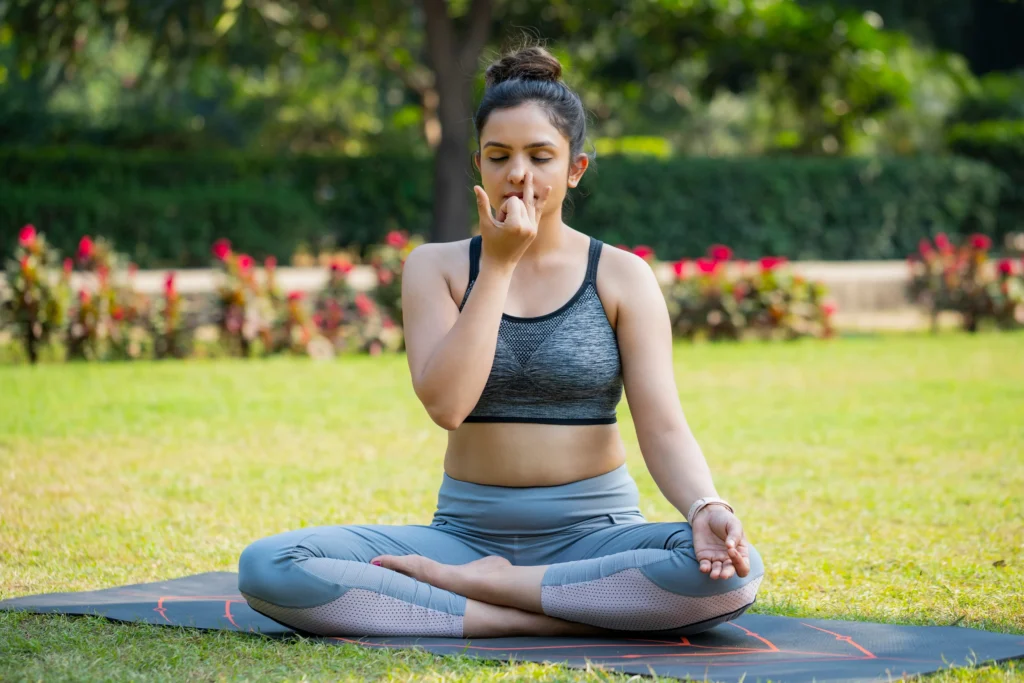
When we tune into ourselves more, we discover how we are truly feeling on a physical basis, learn to read emotional cues and embody self-care.
This creates an internal dialogue between mind and body, and we start to build our emotional intelligence with the confidence to honour ourselves and how we are feeling.
We can recognise to pull back when our energy levels are flagging and make time for practices which nourish our nervous system.
It means active, internal listening to sensations within our body – observing areas that feel tight, heavy or dull, or perhaps other areas that feel tingly and spacious. Starting to notice patterns of tension within the body. And using the breath and mindful practices to release this tension.
Check out our physical practices gently build confidence through embodiment. For more ways to connect physically.

Rebuilding your Mind-Body Connection Guide
Daily practices, such as mindfulness – where we tune into our senses, help us to reconnect mind-body.
We then go a little deeper and reflect on how we are feeling physically, energetically, emotionally, mentally and spiritually. These are called the koshas, or layers of the body and a good yoga teacher will invite you to “check in” noticing and responding to all the layers of “you” and overtime, with regular practice, this becomes instinctive and natural.
It can sometimes seem a bit too overwhelming, but it doesn’t need to be difficult, just come along to one of our Thrive Journey online classes where our yoga teachers guide you through self-reflection and body awareness.
Step 1 – Mindful Awareness
A simple body scan is a wonderful practice for nervous system regulation and to shift awareness from your head to your body.
1: First find a comfortable sitting or standing position
2: Become aware of your breath. Don’t try to change the breath, simply notice the natural rise and fall of the body and the rhythm of your breath.
3: Observe the temperature of the breath – the coolness of the inhale and the gentle warmth of the exhaled breath.
4: Then turn your focus inward. Notice your jaw – is it clenched? If so, invite a softness into this area, feel your tongue, let it feel heavy, resting in the base of your mouth.
5: Then shift your awareness around your body – in a yoga nidra, this is called a rotation of consciousness as you check in to different body parts as they are named.
6: You can do this throughout the whole body.
As you practice your body scan, you start to notice physical sensations and even emotions that are held within the body – such as anger, sadness, joy and contentment and how each emotion creates different physical sensations. This technique is often used to process and manage previous trauma. (3)
Over time this becomes instinctive and you start to feel a deep body awareness. And a realisation that our body’s hold our truth – not our minds! Your body can tell you when you are tired, tense, hungry – we just have to learn to listen!
For more on emotional healing read this article on understanding your body, hormones and mind.

Step 2 – Incorporate yoga into your day
Yoga is a tool which helps us to come into our body and release tension. We can tune into our breath to help act as the conduit or channel between mind and body.
When we are “in our heads” with dozens of thoughts and distractions, it stops us tuning into our body. But our breath can act as a circuit breaker. We start to notice our breath, which stops our mind racing and gives us an anchor, something to focus on.
A 2024 study (4) by academics in New Delhi, India, concluded that yoga offers a promising avenue for reducing stress and promoting overall well-being. It found the use of deliberate, measured movements, conscious breathing and mindfulness in yoga stimulated the nervous system, resulting in a state of relaxation.
In Yoga and Qigong we combine movement with breath and this helps to gently release tension. Check out these articles for more on yoga for anxiety relief, the connection between yoga and mental health and grounding yoga poses.
Step 3 – Connect with your breath
As mentioned earlier breathwork (in yoga this is called pranayama) and Qigong is essentially breathwork, generating and moving energy through the body.
When we are stressed we tend to take short, shallow breaths which can cause us to feel breathless and exacerbate this stress state, but when we slow our breathing and in particular lengthen our exhalation, we shift into our parasympathetic or healing state.
The great news is, we always have our breath! So once you are comfortable with the practices you can use them on and off the mat. Check out our article on seven types of pranayama and all you need to know about Bellows Breath.
Step 4 – Meditation
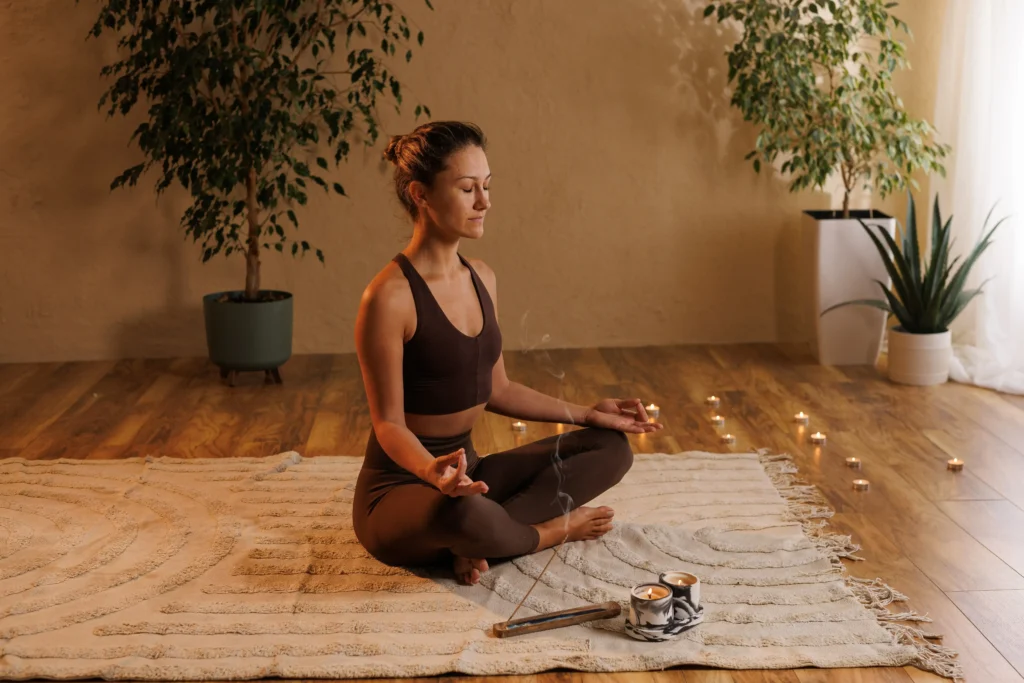
Meditation helps to still our mind by shifting us from being on “autopilot” (where you are literally going through the motions of your day) into a state of clarity and calm.
As your practice develops you become increasingly emotionally aware and focused.
And if you are a bit confused about the difference between meditation and breathwork, you’re not alone. Read this article to help you understand how each practice works.
Step 5 – Ayurvedic Lifestyle Practices
Ayurveda means the Science of Life and is a sister practice to yoga. There are daily rituals to help promote energy balance and mind-body connection. These routines include Dosha prescribed self-massage (Abhyanga), oils, herbs and diet. At Thrive Journey we have an Ayurvedic expert who can help you discover your dosha (constitution) and we have a huge range of Ayurvedic recipes to support mental health and wellness.

Our Stories
Sara, a working mum of two from NSW, Australia, believes the Thrive Journey yoga classes have helped her reconnect with her mind-body.
She says: “The classes have made a huge difference to my life.”
“You combine your breath with the movement, which helps to bring you into your body and ground you. This has stopped my mind racing. The focus on the breath helps to slow your breath and helps you feel relaxed.”
“When I start my day with yoga, I feel like my day is set up well, as I have connected with my body, my breath and my mind.”
Read more on how you can weave your practice into your day and embrace the yogic lifestyle.
Your Journey to Mind-Body Balance Starts Here
Hopefully you have learnt how important it is to be body aware and also, how simple it is – with the right practices. Thrive Journey is here for you – a guided wellness journey to support you to rebuild your mind-body connection through a range of holistic wellness tools such as yoga, breathwork, meditation and Ayurveda.
Check out our women’s wellness program and join our supportive community.
References:
(1) Wac, Katarzyna & Ferreira, Denzil & Tassini, Kevin & Hong, Jin-Hyuk & Ramos Rojas, Julian. (2011). Getting closer: An empirical investigation of the proximity of user to their smart phones. Ubicomp. 163-172. 10.1145/2030112.2030135. https://dl.acm.org/doi/10.1145/2030112.2030135
(2) Chu B, Marwaha K, Sanvictores T, et al. Physiology, Stress Reaction. [Updated 2024 May 7]. In: StatPearls [Internet]. Treasure Island (FL): StatPearls Publishing; 2026 Jan-. Available from: https://www.ncbi.nlm.nih.gov/books/NBK541120/
(3) The Body Keeps the Score – Professor Bessel Van Der Kolk
(4) Khajuria A, Kumar A, Joshi D, Kumaran SS. Reducing Stress with Yoga: A Systematic Review Based on Multimodal Biosignals. Int J Yoga. 2023 Sep-Dec;16(3):156-170. doi: 10.4103/ijoy.ijoy_218_23. Epub 2024 Feb 9. PMID: 38463652; PMCID: PMC10919405. https://pmc.ncbi.nlm.nih.gov/articles/PMC10919405/